Private Label Manufacturing in Turkey: Sourcing Guide
A practical guide to finding vetted suppliers, protecting your intellectual property, managing sampling and quality control, and shipping private label goods from Türkiye.
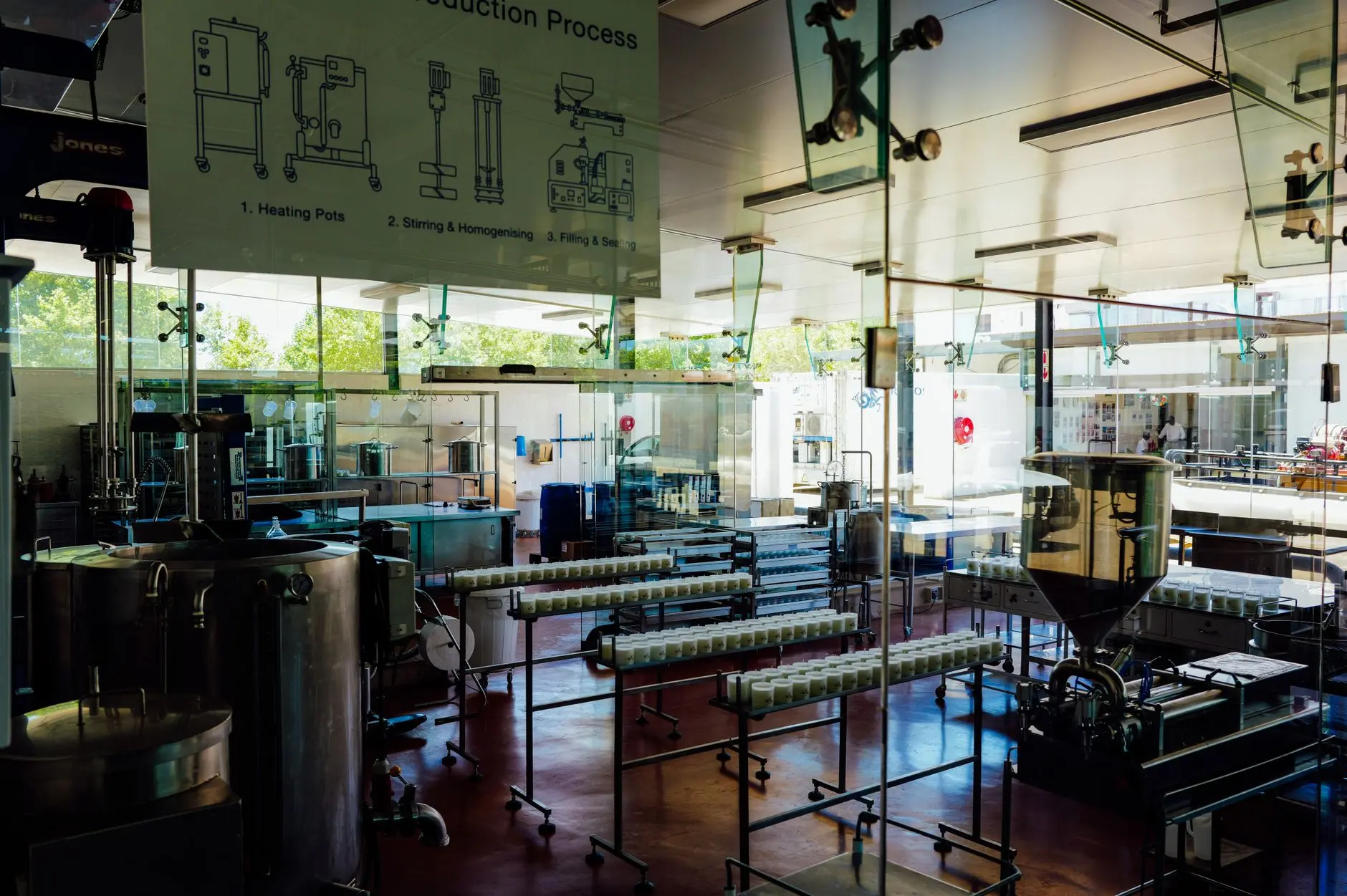
Private label manufacturing in Türkiye allows international brands, retailers, and e-commerce sellers to produce customized goods under their own brand names by leveraging the country's advanced industrial base, skilled workforce, and strategic trade connectivity. By shifting production to Turkish contract manufacturers, companies can achieve shorter lead times to European and Middle Eastern markets, lower minimum order quantities than East Asian alternatives, and full compliance with stringent international quality standards. Successfully navigating this process requires a structured approach to supplier identification, rigorous contract negotiation, proactive intellectual property protection, and thorough on-site quality control.
Key takeaways
- Türkiye offers established contract manufacturing ecosystems across apparel, cosmetics, packaged food, home goods, and light industrial hardware, supported by modern Organized Industrial Zones (OSBs).
- Protecting your intellectual property through the Turkish Patent and Trademark Office (TÜRKPATENT) before sharing proprietary formulations, CAD drawings, or branded packaging designs is essential.
- Clear technical packs, formal quality service agreements based on standard Acceptable Quality Limit (AQL) benchmarks, and bilingual manufacturing contracts prevent disputes over quality variations and delayed production schedules.
- Türkiye’s Customs Union with the European Union enables tariff-free movement for most industrial goods via the A.TR movement certificate, providing a distinct logistics and cost advantage for Western buyers.
Core Industries for Private Label Production in Türkiye
Türkiye's industrial infrastructure spans traditional consumer goods and complex formulated products. Knowing which sectors possess mature contract manufacturing ecosystems helps foreign buyers match their product specifications with the right industrial clusters.
Apparel, Fashion, and Technical Textiles
Türkiye is one of the world's most sophisticated apparel manufacturing hubs, anchored in cities such as Istanbul, Bursa, Denizli, and Izmir. Contract manufacturers in this sector offer full-package production, taking projects from fabric sourcing and yarn spinning to cutting, sewing, dyeing, finishing, and custom retail packaging. The textile ecosystem excels in organic cotton garments, denim, knitwear, activewear, and home textiles like towels and bed linens. Many Turkish mills hold globally recognized certifications such as OEKO-TEX, Global Organic Textile Standard (GOTS), and Better Cotton Initiative (BCI), simplifying supply chain compliance for international retailers.
Cosmetics, Personal Care, and Cleaning Chemicals
The Turkish chemical and personal care sector has grown into a major hub for white-label formulations and contract packaging. Manufacturers centered around Istanbul, Kocaeli, and Gaziantep produce private label skincare, haircare, perfumes, wet wipes, and household cleaning formulations. Facilities frequently operate under Good Manufacturing Practice (ISO 22716 / cosmetic GMP) standards and can deliver private label formulations compliant with European Regulation (EC) No 1223/2009. Buyers can choose between off-the-shelf stock formulations with customized fragrances and packaging or fully custom-developed chemical recipes.
Related guide:OEM vs ODM Manufacturing in Turkey: Full Guide
Packaged Foods, Confectionery, and Agricultural Goods
As a leading agricultural power, Türkiye provides extensive contract packaging and private label processing for shelf-stable foods, confectionery, dried fruits, nuts, olive oil, and tomato-based products. Industrial clusters in Izmir, Bursa, Manisa, and Mersin host modern facilities certified under BRCGS, IFS, FSSC 22000, and Halal standards. Sourcing food items under private label in Türkiye requires careful attention to seasonal harvesting cycles, residue testing, and shelf-life stability testing tailored to the target import market's food safety authorities.
Home Goods, Kitchenware, and Plastics
Industrial mold-making and plastics injection molding are major strengths of Turkish manufacturing. Private label buyers routinely source non-stick cookware, stainless steel kitchen accessories, melamine tableware, bathroom fittings, and plastic storage solutions from hubs in Istanbul, Kayseri, and Kahramanmaraş. Turkish mold-making shops offer significantly lower tooling costs and faster prototyping lead times than Western European counterparts, while maintaining strict adherence to food-contact safety standards.
Hardware, Automotive Aftermarket, and Light Engineering
Beyond consumer goods, Türkiye maintains an expansive contract manufacturing base for aftermarket automotive components, mechanical fasteners, aluminum extrusions, and electrical switches. Industrial clusters in Bursa, Konya, and Ankara support high-precision machining, stamping, casting, and powder coating under ISO 9001 and IATF 16949 quality frameworks. These suppliers frequently serve as tier-one or tier-two original equipment manufacturers (OEMs), giving them the engineering discipline needed for rigorous private label technical programs.
Finding and Vetting Private Label Suppliers
Securing a capable manufacturing partner requires moving past basic online directory searches to evaluate a factory’s technical competence, operational capacity, financial stability, and legal track record.
Utilizing Chambers of Commerce and Exporters' Associations
Foreign buyers should begin their search through formal industrial bodies. The Ministry of Trade oversees several Exporters’ Associations (İhracatçı Birlikleri), such as the Istanbul Textile and Apparel Exporter Associations (İHKİB) or the Istanbul Chemicals and Chemical Products Exporters Association (İKMİB). These associations maintain active databases of certified export manufacturers. Local Chambers of Commerce (such as the Istanbul Chamber of Commerce, ITO, or Aegean Region Chamber of Industry, EBSO) can confirm a company’s registration, export history, and production capacity certification (kapasite raporu).
Evaluating Organized Industrial Zones (OSBs)
The vast majority of Türkiye’s top-tier manufacturers operate within Organized Industrial Zones (Organize Sanayi Bölgeleri, or OSBs). These specialized zones provide dedicated logistics infrastructure, uninterrupted power, water treatment, and centralized customs clearance facilities. Sourcing directly from an established OSB facility generally indicates a higher standard of operational scale, workplace safety compliance, and regulatory oversight compared to standalone workshops in mixed commercial areas.
On-Site Audits and Factory Assessment Criteria
Before issuing requests for quotation (RFQs) or committing capital, foreign companies must evaluate potential suppliers against practical operational criteria:
- In-house versus subcontracted operations: Determine which processes happen on the factory floor and which are outsourced to third-party workshops, as excessive subcontracting introduces quality variability.
- Machine maintenance and technology level: Inspect age, automation level, and calibration logs for critical machinery such as CNC cutters, injection presses, or automated filling lines.
- Social and environmental compliance: Verify third-party ethical audit records such as Sedex (SMETA), amfori BSCI, or WRAP, which are essential for protecting your brand's reputation in regulated retail markets.
- Financial health and ownership structure: Confirm the enterprise's corporate standing via the Turkish Trade Registry Gazette (Ticaret Sicil Gazetesi) to verify corporate directors and ensure no ongoing insolvency proceedings.
Product Development, Prototyping, and Sampling
The transition from a design concept to a finished private label product requires strict management of technical expectations, physical prototyping, and sample validation.
Tech Packs and Technical Specifications
Misunderstandings during private label onboarding usually trace back to ambiguous product briefs. International buyers must provide comprehensive technical specification files (tech packs) that leave nothing to interpretation. These documents must include exact dimensions with acceptable tolerances, raw material compositions, Pantone/RAL color codes, surface finishes, tensile strengths, primary and secondary packaging dimensions, barcoding locations, and regulatory marking requirements. For formulated goods like cosmetics or food, the brief must explicitly state forbidden ingredients, target pH levels, viscosity, and active concentrations.
Navigating Tooling, Molds, and Recipe Development
If your private label product requires custom shapes or packaging containers, tooling and molds must be engineered. Turkish toolmakers in centers like Gebze and Bursa produce custom steel and aluminum injection molds at competitive price points. In your contract, clearly establish that tooling and mold ownership belongs exclusively to your company, even if held physically at the supplier’s facility. You should specify maintenance responsibilities, expected cycle life, and terms for transferring the mold to an alternative facility if necessary.
Managing Revisions and Golden Samples
The sampling phase usually involves multiple rounds: proto-samples for form and fit, pre-production samples (PPS) using actual production materials, and finally the approved production benchmark, commonly referred to as the "golden sample." Once you approve a sample, both you and the factory manager should sign and date two identical physical copies. One remains on the production line floor as the physical quality target, while the second is retained by your quality assurance team to evaluate final batch consistency.
Contractual Protection, Intellectual Property, and NDAs
Operating in an international market requires robust legal documentation that anticipates disputes and establishes clear enforceable mechanisms under Turkish and international law.
Non-Disclosure and Non-Compete Agreements
Before handing over proprietary drawings, product formulas, customer lists, or marketing materials, execute a bilateral Non-Disclosure and Non-Circumvention Agreement. This agreement must be governed by Turkish law or a recognized international arbitration framework (such as the Istanbul Arbitration Centre, ISTAC, or the International Chamber of Commerce, ICC). Ensure the agreement explicitly restricts the manufacturer from selling your customized designs, overruns, or rejected batches to other buyers, regional distributors, or domestic retail channels.
Trademark Protection via TÜRKPATENT
A critical oversight made by foreign brands is failing to register their trademarks in Türkiye before starting production. Türkiye operates under a "first-to-file" trademark registration system administered by the Turkish Patent and Trademark Office (TÜRKPATENT). If an unprincipled third party or local agent registers your brand name or logo locally, Turkish customs authorities can legally seize your export shipments at the port on grounds of trademark infringement. File your trademark applications across your relevant product classes before sharing artwork files with manufacturers.
Manufacturing Supply Agreements
Never rely solely on standard commercial purchase orders. Work with commercial legal counsel to draft a comprehensive Private Label Manufacturing Agreement. Key clauses must address:
- Defect thresholds and penalties: Clear remedies if defect rates exceed agreed AQL limits, including factory-funded rework, chargebacks, or shipment discounts.
- Raw material traceability: Warranties that the supplier will not substitute sub-tier materials without prior written approval.
- Lead times and late delivery liquidated damages: Contractually specified daily or weekly financial penalties for unexcused shipment delays.
- Termination and inventory buyout terms: Procedures for winding down production, accounting for remaining raw materials, and decommissioning private label tooling.
Quality Control, Factory Audits, and Compliance
Maintaining quality standards across thousands of units requires an active, multi-stage inspection strategy rather than passive reliance on factory self-reporting.
In-Line and Pre-Shipment Inspections
Implement third-party or dedicated in-house inspections at critical milestones during the production cycle:
- Initial Production Check (IPC): Verification of incoming raw materials, masterbatches, and packaging components before production begins.
- During Production Inspection (DUPRO): Performed when 20% to 50% of the run is completed to identify dimensional, cosmetic, or assembly errors while corrections can still be applied without scrapping the entire batch.
- Final Random Inspection (FRI) / Pre-Shipment Inspection (PSI): Conducted when 100% of the order is manufactured and at least 80% is packed. Inspectors pull statistically representative sample sizes based on ISO 2859-1 (AQL) standards to test workmanship, functionality, dimensions, packaging integrity, and shipping carton drop resistance.
Regulatory and Market Compliance Certifications
Your private label products must meet all regulatory and consumer protection standards applicable in the destination country. Turkish manufacturers regularly produce goods conforming to European Union directives and international equivalents:
- CE Marking: Mandatory for machinery, electronics, medical devices, personal protective equipment, and toys entering the European Economic Area. Verify that the factory has valid technical files and test reports issued by accredited notified bodies.
- REACH and RoHS: Ensure chemical compliance preventing hazardous substances, heavy metals, phthalates, and restricted azo dyes in consumer products.
- Food Contact Materials: Mandating compliance with EU Regulation (EC) No 1935/2004 or US FDA regulations for cookware, storage containers, and packaging.
Packaging, Labeling, and Barcoding Rules
Packaging errors are among the most frequent causes of customs delays and retailer chargebacks. Ensure your manufacturer strictly follows requirements regarding country of origin markings ("Made in Türkiye"), mandatory warning labels in the destination market's official languages, GS1-compliant EAN/UPC barcodes, recycling symbols, and master carton stacking limitations.
Logistics, Customs, and Incoterms for Export Orders
Türkiye’s geographic position bridges Europe, Asia, and North Africa, providing extensive multi-modal transport routes that offer a distinct speed advantage over ocean shipping from East Asia.
Selecting Appropriate Incoterms
Selecting the correct International Commercial Terms (Incoterms) determines where liability and cost transfer from the Turkish manufacturer to your business:
- FOB (Free on Board): Recommended for experienced importers who have negotiated volume ocean or air freight rates and wish to manage their own forwarding from Turkish ports such as Ambarlı (Istanbul), Gemlik (Bursa), Alsancak/Aliağa (Izmir), or Mersin.
- FCA (Free Carrier): Ideal for road freight departures directly from an interior Organized Industrial Zone terminal.
- CIF / CFR (Cost, Insurance, and Freight): The manufacturer arranges and pays for shipping to your destination seaport, leaving local import clearance and inland haulage to you.
- DDP (Delivered Duty Paid): Convenient for smaller buyers, but requires the seller or their clearing agent to handle destination taxes and customs clearance, which many Turkish suppliers prefer not to manage.
Customs Union Advantages with the European Union
Industrial goods traded between Türkiye and the European Union benefit from the EU-Türkiye Customs Union agreement. Under this framework, non-agricultural industrial goods that are in free circulation in Türkiye enter the EU free of basic customs duties. To claim this exemption, the exporter’s customs broker must issue an A.TR Movement Certificate, which must be verified and endorsed by Turkish customs authorities prior to departure. Note that primary agricultural products and certain processed agricultural goods fall outside the A.TR regime and rely instead on pan-Euro-Mediterranean preferential rules of origin backed by EUR.1 certificates.
Freight Transit Modes and Timelines
Depending on your project's urgency and margin structure, several logistics routes are available:
- Road Freight (TIR): Standard for deliveries into Western and Central Europe. Trailers depart industrial centers daily, delivering directly to European distribution centers in three to seven days, depending on customs border processing.
- Short-Sea and Ro-Ro Shipping: Roll-on/roll-off (Ro-Ro) vessels connect Turkish ports like Pendik, Çeşme, and Yalova directly to European ports like Trieste (Italy) and Toulon (France), bypassing road border congestion.
- Deep-Sea Ocean Freight: Container vessels provide weekly sailings to North American, Middle Eastern, and Asian destinations, offering predictable transit times from major Turkish container terminals.
- Air Freight: Centered around Istanbul Airport (IST) and Sabiha Gökçen (SAW), air freight handles high-value, low-volume goods, fashion replenishment, and urgent production samples with transit times of 24 to 72 hours globally.
Step-by-Step Checklist for Launching a Private Label Run
- Finalize technical documentation: Compile comprehensive tech packs, CAD designs, material datasheets, packaging specifications, and acceptable quality tolerances.
- Register intellectual property: Apply for trademark and design patent registrations with TÜRKPATENT before initiating RFQs.
- Shortlist and qualify suppliers: Screen candidates via Exporters' Associations, Chambers of Industry, and trade registries; verify operating licenses and certifications.
- Execute mutual non-disclosure agreements: Protect proprietary specifications and trade secrets under legally binding NDAs governed by Turkish or international arbitration.
- Request commercial quotations: Issue standardized RFQs specifying volume tiers, packaging requirements, Incoterms, and payment terms.
- Develop and approve prototypes: Commission initial prototypes, iterate design revisions, and officially sign off on duplicate golden samples.
- Finalize manufacturing contract: Execute a comprehensive contract governing pricing, lead times, defect rate thresholds, IP assignment, and liquidated damages.
- Establish quality control protocol: Hire an independent inspection agency or schedule internal QA personnel to perform DUPRO and pre-shipment AQL audits.
- Organize logistics and documentation: Confirm Incoterms, line up freight forwarders, verify export documentation (commercial invoice, packing list, certificate of origin, or A.TR/EUR.1 certificates), and coordinate customs clearance.
Common Mistakes in Turkish Private Label Sourcing and How to Avoid Them
Even seasoned procurement managers can encounter preventable setbacks when entering the Turkish manufacturing market. Understanding these common traps will protect your capital and project timelines.
Relying on informal or verbal understandings: Turkish business culture values relationship building and face-to-face interaction. However, relying on warm verbal assurances or messaging app agreements rather than documenting technical specs and delivery commitments in writing creates severe risks when defects arise. Every amendment to materials, colors, packaging, or schedules must be documented in formal written addenda signed by corporate signatories.
Overlooking local holiday production shutdowns: Failing to account for national and religious holidays can disrupt delivery windows. Production and domestic trucking often slow down or stop during major holidays, including Eid al-Fitr (Ramazan Bayramı) and Eid al-Adha (Kurban Bayramı), as well as national holidays. Align your production schedule with your factory’s operating calendar well in advance.
Failing to secure tooling and mold ownership: When paying for custom injection molds, cutting dies, or printing plates, foreign buyers sometimes fail to explicitly contract ownership rights. If the relationship deteriorates, an uncooperative supplier may refuse to release the tooling, claiming it as their proprietary property. Ensure your agreement states that tooling remains your property at all times, marked with your serial asset tags, and must be released immediately upon written demand.
Neglecting raw material source verification: A factory may present flawless prototype samples produced from premium raw materials, but switch to cheaper local or imported inputs during mass production to protect tight margins. Mitigate this risk by defining allowable material origins in your contract, requiring batch material test certificates (MTRs), and performing chemical or compositional tests during in-line inspections.
Skipping pre-shipment inspections to save costs: Attempting to save on third-party inspection fees before cargo departs Turkish ports is a costly miscalculation. Resolving quality disputes, returning defective containers, or funding local rework once goods arrive at your destination warehouse is far more expensive than catching defects on the factory floor in Türkiye before final payment release.
Frequently asked questions
What are standard Minimum Order Quantities (MOQs) for private label manufacturing in Türkiye?
MOQs depend entirely on the product category and tooling requirements; apparel manufacturers often accept runs from 300 to 1,000 units per style or colorway, whereas automated plastics, packaging, and personal care chemical runs typically require higher minimums based on raw material batch sizes and machine changeover economics.
Can Turkish private label manufacturers help with custom packaging and branding?
Yes, most established contract manufacturers provide full turnkey packaging solutions, working with local printing and box-making partners to produce custom-printed retail boxes, polybags, hangtags, tamper-evident seals, and master shipping cartons branded with your artwork.
How do I verify if a Turkish supplier is financially legitimate and legally registered?
You can verify a supplier's legal registration by requesting their Tax Plate (Vergi Levhası), Trade Registry Gazette entry (Ticaret Sicil Gazetesi), and Chamber of Commerce registration certificate (Oda Kayıt Belgesi), or by consulting the commercial attache at your national embassy in Türkiye.
What payment terms are customary when manufacturing private label goods in Türkiye?
Standard payment terms for new international accounts are typically structured as a 30% advance deposit to finance raw material purchasing, with the remaining 70% balance payable against a clean pre-shipment inspection report and the presentation of shipping documents (Bill of Lading or CMR), or through an Irrevocable Letter of Credit (L/C).
Do I need to pay customs duties when importing industrial private label goods from Türkiye into the EU?
Under the EU-Türkiye Customs Union, most non-agricultural industrial goods enter the European Union tariff-free, provided the shipment is accompanied by a valid A.TR Movement Certificate issued by the exporter’s customs broker and stamped by Turkish customs.
How long does the sampling and prototyping process usually take in Türkiye?
Sampling lead times generally range from two to six weeks, depending on whether the product relies on off-the-shelf fabrics and materials or requires newly engineered tooling, custom color laboratory dips, or proprietary chemical formulation stability tests.
Are private label manufacturers in Türkiye open to signing international NDAs?
Reputable contract manufacturers accustomed to international trade regularly sign non-disclosure agreements, though it is strongly recommended to execute agreements governed by Turkish law or international arbitration forums to ensure practical enforceability within the country.
More on this topic: Sourcing from Turkey: Manufacturers, Suppliers and Production